About Us
Cosmic Ray Division (CRD) of A.I. Alikhanyan National Laboratory (Yerevan Physics Institute),
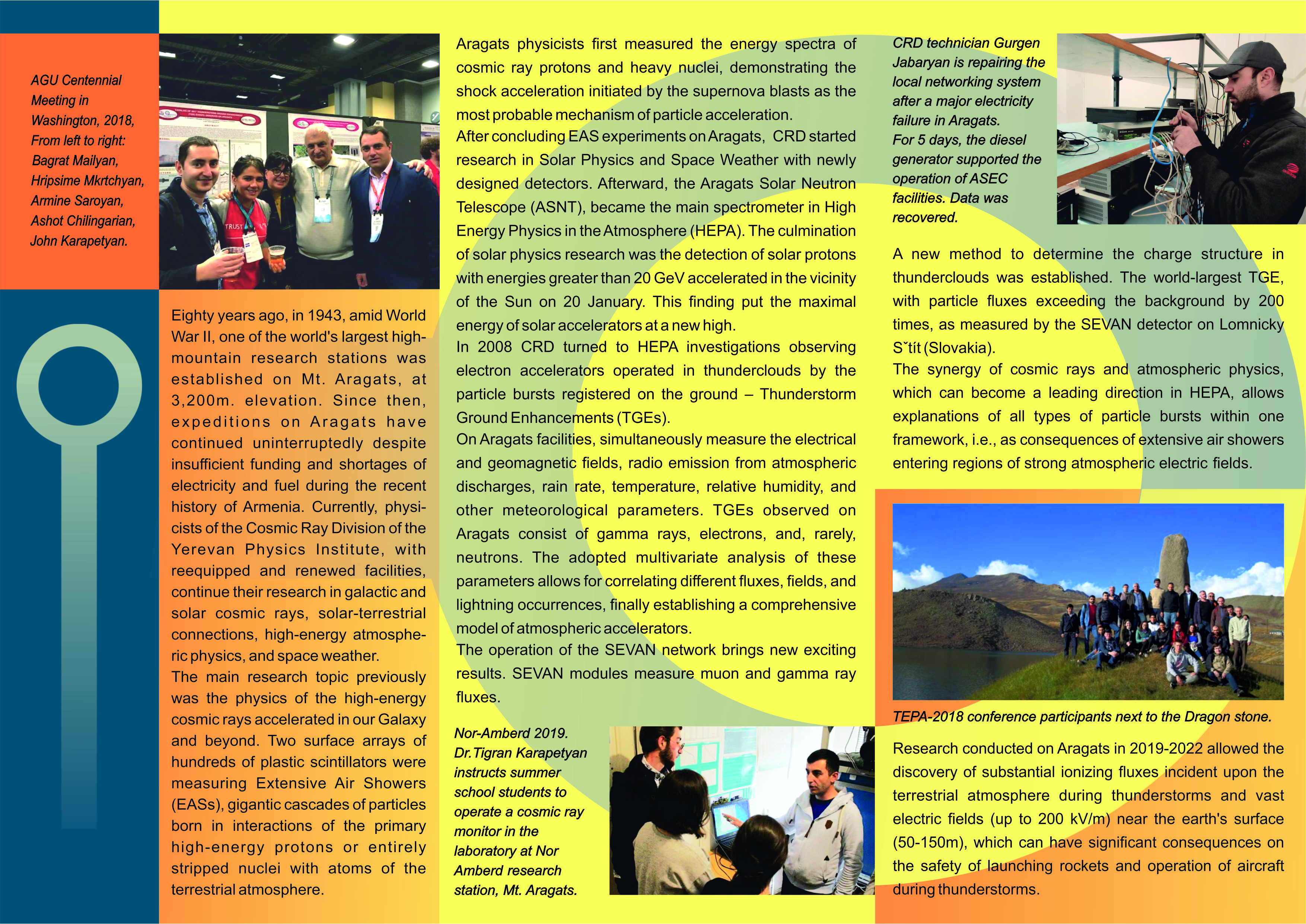
Continuous Cosmic Ray research for 80 years - POSTER 
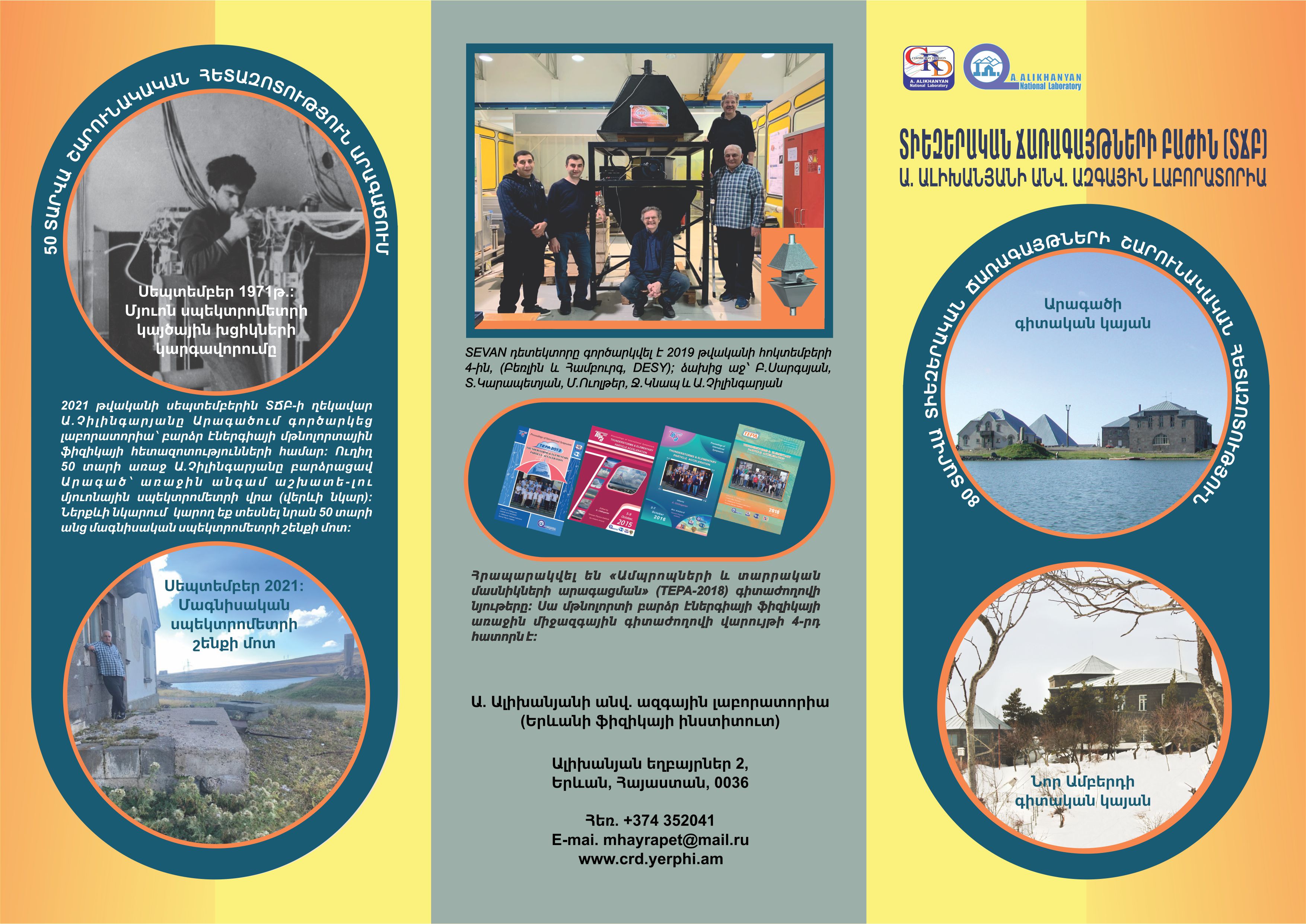
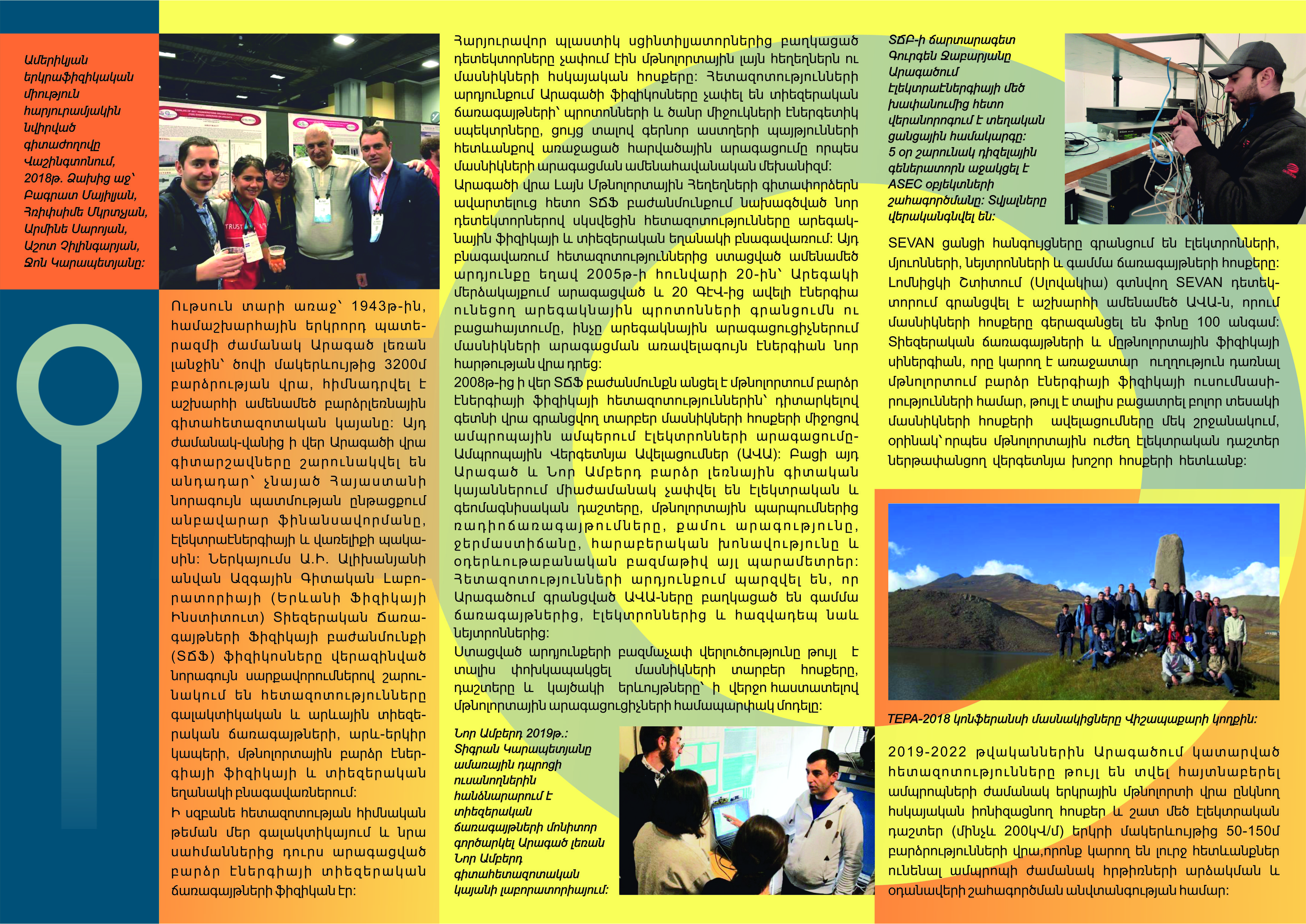
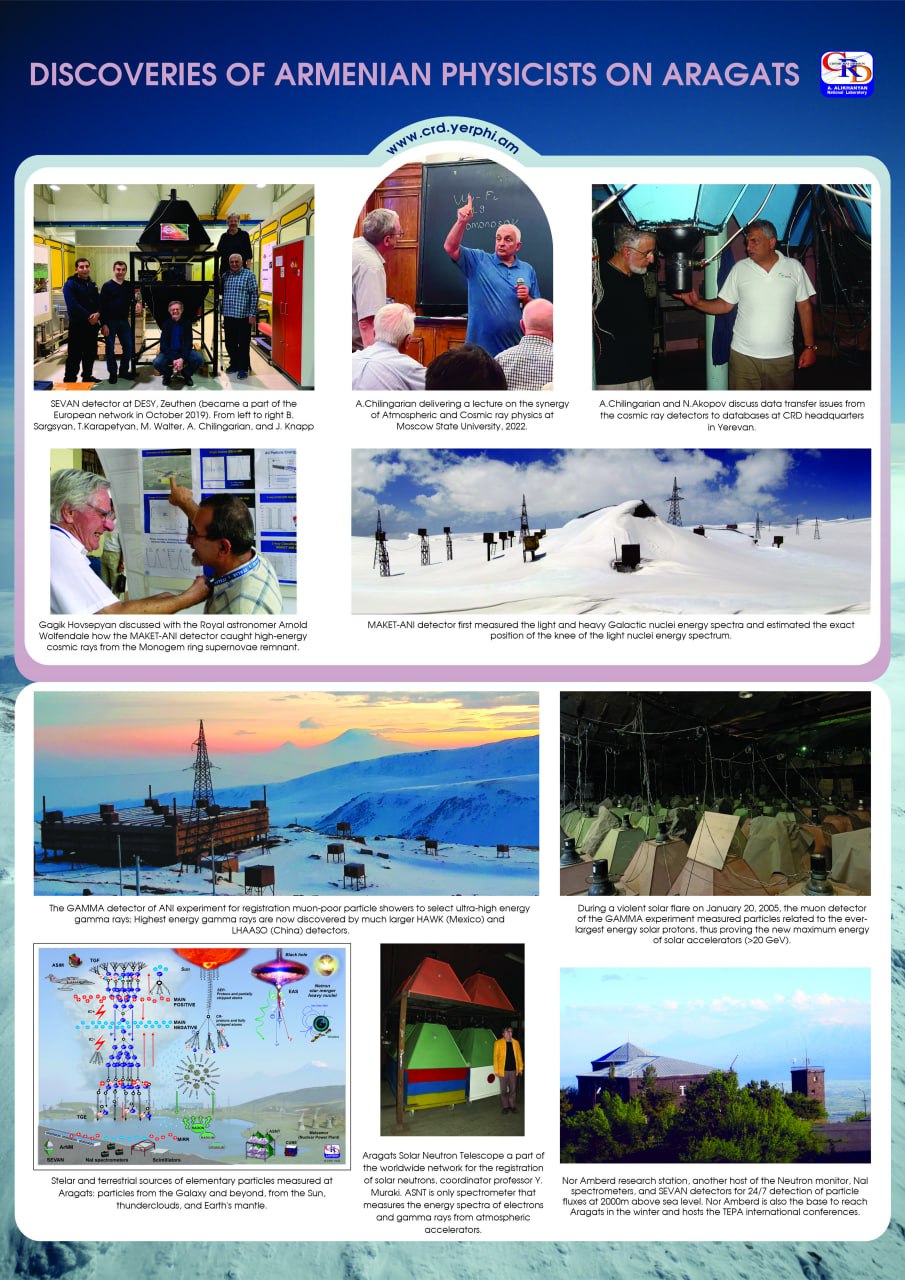
Eighty years ago, in 1943, amid World War II, one of the world’s largest high-mountain research stations was established on Mt. Aragats, at 3,200 m. elevation. Since then, expeditions on Aragats have continued uninterruptedly despite insufficient funding and shortages of electricity and fuel during the recent history of Armenia. Currently, physicists of the Cosmic Ray Division of the Yerevan Physics Institute, with reequipped and renewed facilities, continue their research in galactic and solar cosmic rays, solar-terrestrial connections, high-energy atmospheric physics, and space weather.
The main research topic previously was the physics of the high-energy cosmic rays accelerated in our Galaxy and beyond. Two surface arrays of hundreds of plastic scintillators were measuring Extensive Air Showers (EASs), gigantic cascades of particles born in interactions of the primary high-energy protons or entirely stripped nuclei with atoms of the terrestrial atmosphere.
Aragats physicists first measured the energy spectra of cosmic ray protons and heavy nuclei, demonstrating the shock acceleration initiated by the supernova blasts as the most probable mechanism of particle acceleration.
After concluding EAS experiments on Aragats, CRD started research in Solar Physics and Space Weather with newly designed detectors. Afterward, the Aragats Solar Neutron Telescope (ASNT), became the main spectrometer in High Energy Physics in the Atmosphere (HEPA). The culmination of solar physics research was the detection and discovery of solar protons with energies greater than 20 GeV accelerated in the vicinity of the Sun on 10 January. This finding put the maximal energy of solar accelerators at a new high.
In 2008 CRD turned to HEPA investigations observing electron accelerators operated in thunderclouds by the particle bursts registered on the ground – Thunderstorm Ground Enhancements (TGEs).
On Aragats facilities, simultaneously measure the electrical and geomagnetic fields, radio emission from atmospheric discharges, rain rate, temperature, relative humidity, and other meteorological parameters. TGEs observed on Aragats consist of gamma rays, electrons, and, rarely, neutrons. The adopted multivariate analysis of these parameters allows for correlating different fluxes, fields, and lightning occurrences, finally establishing a comprehensive model of atmospheric accelerators.
The operation of the SEVAN network brings new exciting results. SEVAN modules measure muon and gamma ray fluxes. A new method to determine the charge structure in thunderclouds was established. The world-largest TGE, with particle fluxes exceeding the background by 200 times, as measured by the SEVAN detector on Lomnicky Sˇtít (Slovakia).
The synergy of cosmic rays and atmospheric physics, which can become a leading direction in HEPA, allows explanations of all types of particle bursts within one framework, i.e., as consequences of extensive air showers entering regions of strong atmospheric electric fields. Research conducted on Aragats in 2019-2022 allowed the discovery of substantial ionizing fluxes incident upon the terrestrial atmosphere during thunderstorms and vast electric fields (up to 200 kV/m) near the earth’s surface (50-150m), which can have significant consequences on the safety of launching rockets and operation of aircraft during thunderstorms.
Three SEVAN detectors are operating in Armenia (on the slopes of Aragats Mt.: 40.25N, 44.15E, altitude 2000, 3200 m), in Croatia (Zagreb observatory: 45.82N, 15.97E, altitude 120 m), Bulgaria (Mt. Musala: 42.1N, 23.35E, altitude 2930 m), in Slovakia (Mt. Lomnicky Stit: 49.2N, 20.22E, altitude 2634 m, on Milesovka hill (50.6N, 13.9E, altitude 837 m) in Czech republic, at DESY Zeuthen (52.3N, 13.5E, altitude 30 m) and DESY Hamburg (53.5730N, 9.8810E, altitude 20m ). The potential recipients of SEVAN detectors are Italy, Israel, France, Jordan, and Algeria.
Обновленная информация ОКЛ 2023 - Постер
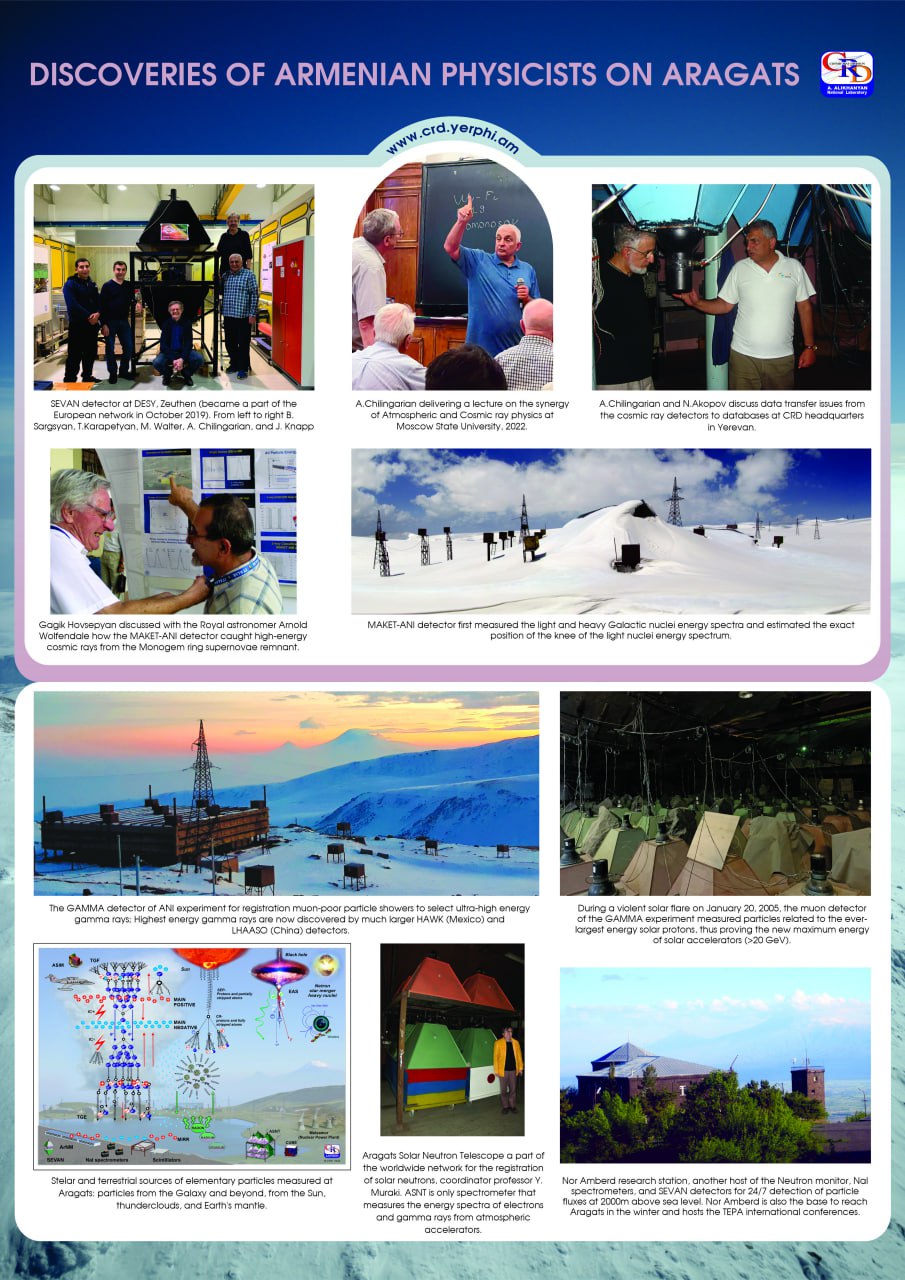
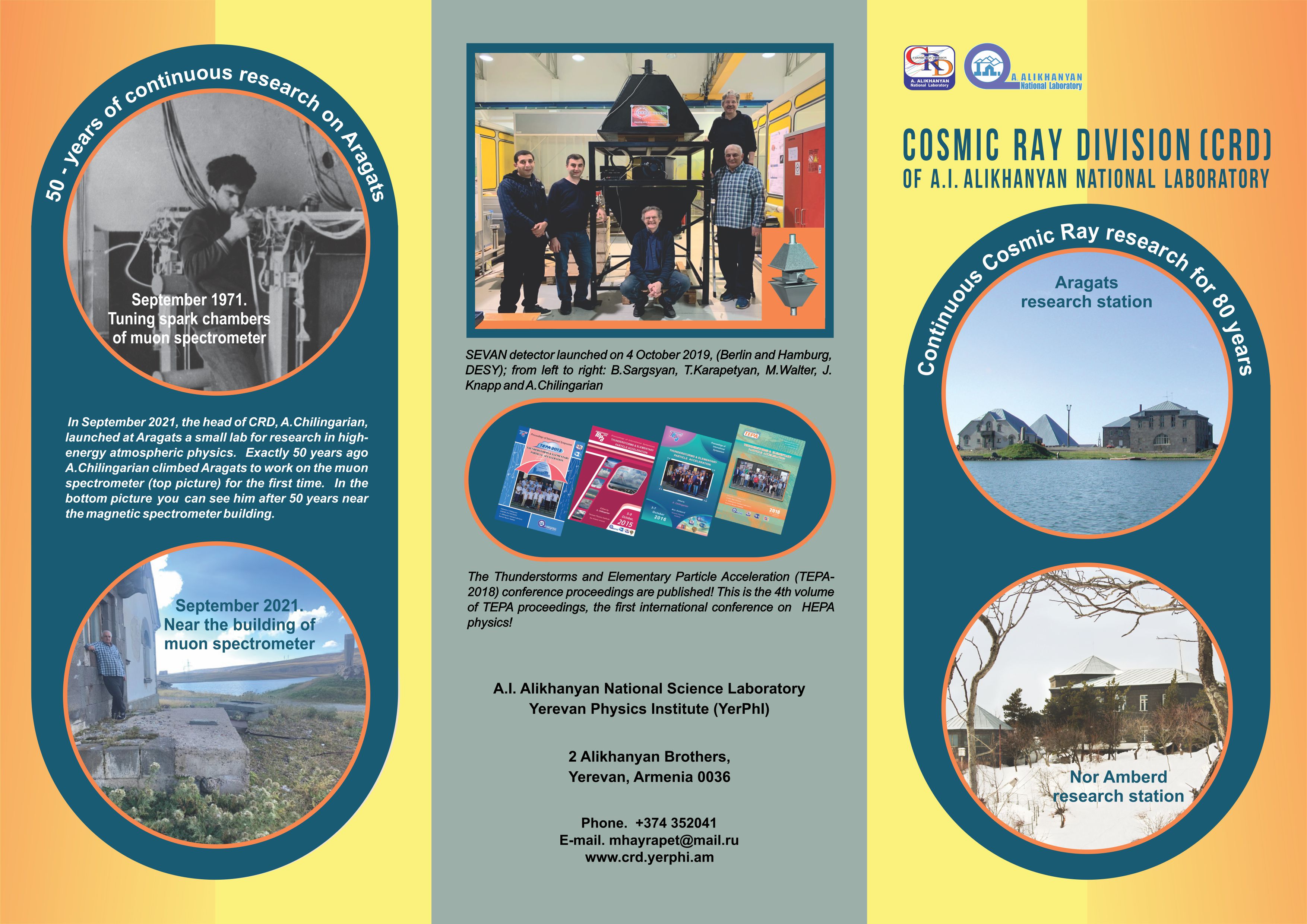
Восемьдесят лет назад, в 1943 году, во время Второй мировой войны, на горе Арагац, на высоте 3 200 м, была создана одна из крупнейших в мире высокогорных исследовательских станций. С тех пор экспедиции на Арагаце продолжались непрерывно, несмотря на недостаточное финансирование и нехватку электроэнергии и топлива в новейшей истории Армении. В настоящее время физики Отдела космических лучей Ереванского физического института, продолжают исследования в области галактических и солнечных космических лучей, солнечно-земных связей, физики высоких энергий в атмосферы и космической погоды.
Ранее основной темой исследований была физика космических лучей, ускоряющихся в нашей Галактике и за ее пределами. Два наземных детектора, состоящих из сотен пластиковых сцинтилляторов, измеряли Широкие аттмосферные ливни (ШАЛ) - гигантские каскады частиц, рождающиеся при взаимодействии первичных высокоэнергетических протонов и ядер с атомами земной атмосферы.
После завершения этих экспериментов на Арагаце начались исследования по новой захватывающей теме - солнечной физике и космической погоде. Кульминацией исследований в области солнечной физики стало обнаружение и открытие солнечных протонов с энергией более 20 ГэВ, ускоренных в окрестностях Солнца 10 января 2005 года. Это открытие определило новую максимальную энергию солнечных ускорителей протонов.
Начиная с 2008 года, CRD приступил к исследованиям высокоэнергетических явлений в атмосфере. Существующие и вновь разработанные детекторы частиц и уникальное географическое положение станции Арагац позволили зарегистрировать около 600 всплесков частиц - грозовых наземных превышений (ГНП). Наблюдаемые на Арагаце ГНП - это гамма-лучи, электроны и реже также нейтроны. Физики Арагаца расширили возможности исследования ГНП за счет одновременного измерения электрического и геомагнитного полей, радиоизлучения от атмосферных разрядов, температуры, точки росы, атмосферного давления, солнечной радиации, относительной влажности и других метеорологических параметров. Принятый многомерный подход к исследованиям позволяет связать потоки элементарных частиц, поля и молнии и в итоге создать комплексную модель атмосферного электронного ускорителя.
Работа сети SEVAN приносит новые интересные результаты. Крупнейшее в мире ГНП с потоками частиц, превышающими фон в 200 раз, измерено детектором SEVAN в Словакии. Модули SEVANа созданные в ААНЛ, измеряют потоки электронов, мюонов, нейтронов и гамма-лучей на 2 самых высоких вершинах Восточной Европы. Оценены максимальные значения разности потенциалов в грозовых облаках, подтвержден эффект дефицита мюонов; создан новый метод определения зарядовой структуры грозовых облаков.
Благодаря точным методам физики частиц и теории электромагнитных взаимодействий, получена очень интересная информацию о вертикальном и горизонталном профилях атмосферных электрических полей. Синергия физики космических лучей и физики атмосферы, которая может стать ведущим направлением в атмосферных исследованиях, позволяет объяснить все типы всплесков частиц как модуляционные еффекты частиц ШАЛ, попадающих в области сильных атмосферных электрических полей. Исследования на Арагаце в 2019-2022 годах позволяют обнаружить огромные ионизирующие потоки, падающие на земную атмосферу во время гроз и очень большие электрические поля (до 200 кВ/м) вблизи поверхности Земли (50-150 м), что критически важно для безопасности запуска ракет и эксплуатации самолетов во время гроз.
Три детектора SEVAN работают в Армении (на склонах горы Арагац: 40.25 с.ш., 44.15 в.д., высота 2000, 3200 м), в Хорватии (обсерватория Загреб: 45.82 с.ш., 15.97 в.д., высота 120 м), Болгарии (г. Мусала: 42.1 с. ш., 23.35 в. ДЕЗИ Цойтен (52.3N, 13.5E, высота 30 м) и ДЕЗИ, Гамбург ( ФРГ) (53.5730N, 9.8810E, высота 20 м). Потенциальными получателями детекторов SEVAN являются Италия, Израиль, Франция, Иордания и Алжир.
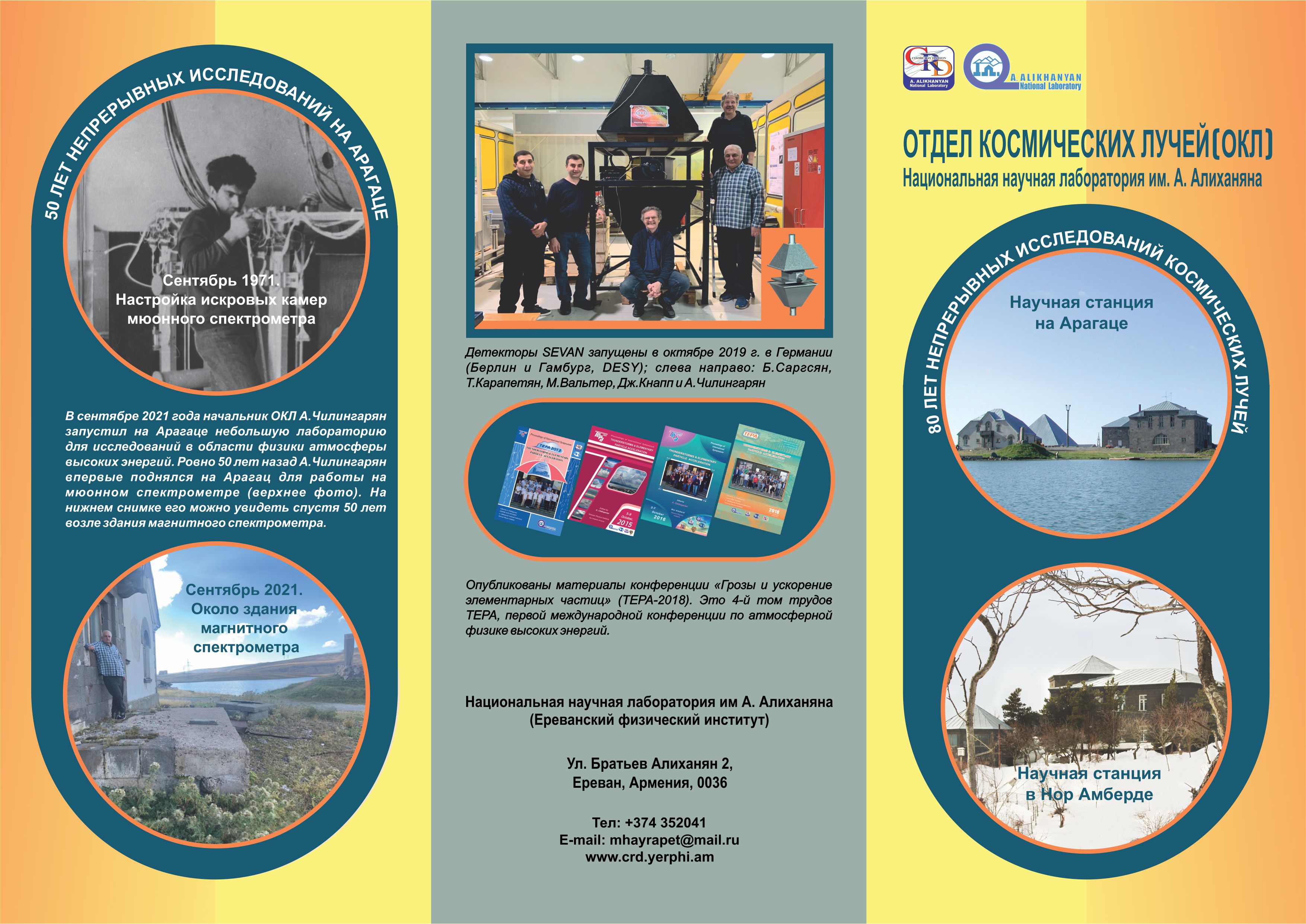
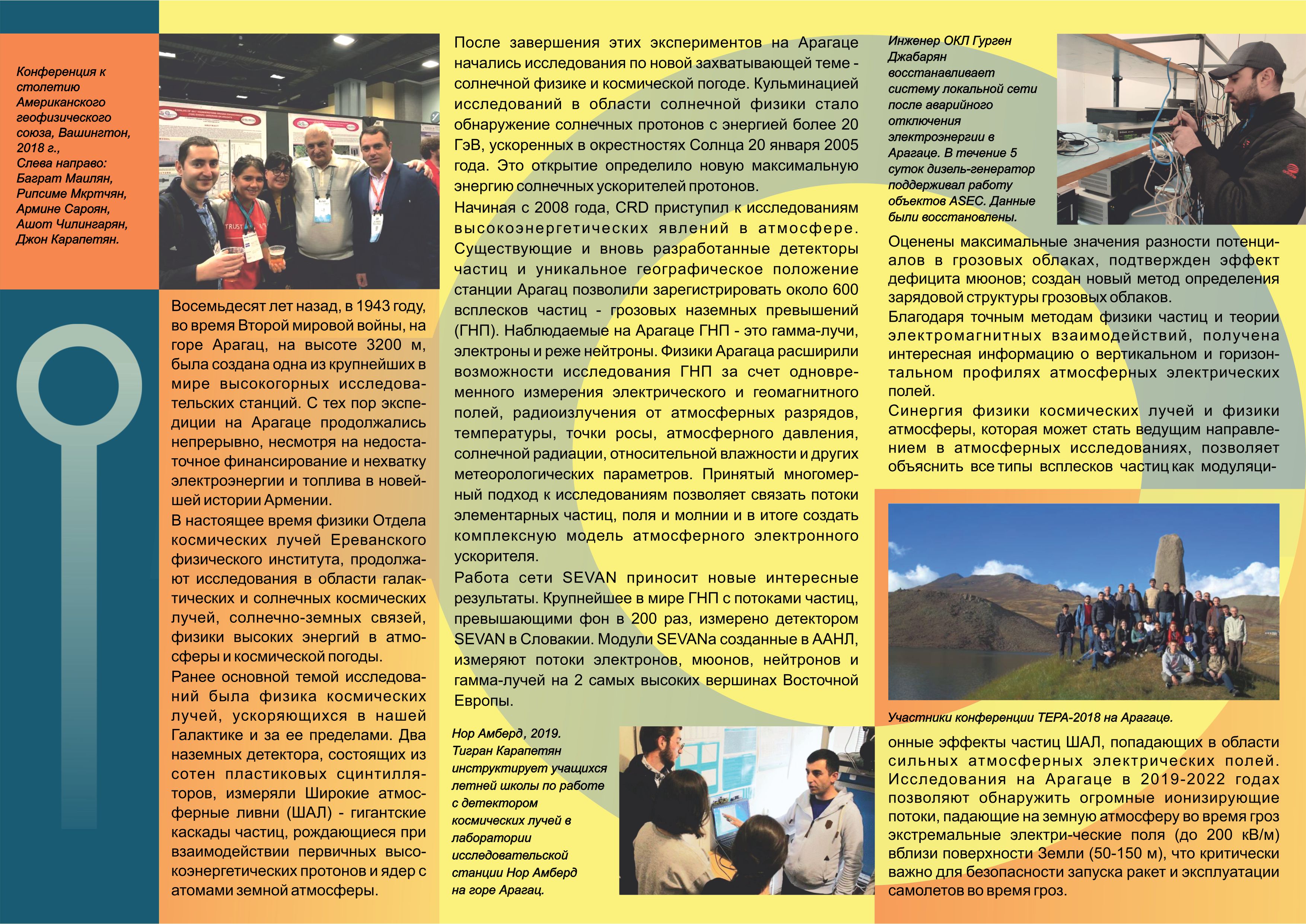
Տիեզերական ճառագայթների բաժին (ՏՃԲ
80 տարվա տիեզերական ճառագայթների շարունակական հետազոտություն - Պաստառ
Ութսուն տարի առաջ՝ 1943 թվականին, Երկրորդ համաշխարհային պատերազմի ժամանակ, 3200 մ բարձրության Արագած լեռան վրա, հիմնվեց աշխարհի ամենամեծ բարձր լեռնային գիտահետազոտական կայաններից մեկը։ Այդ ժամանակից ի վեր Արագածի վրա գիտարշավներն անխափան շարունակվել են՝ չնայած Հայաստանի նորագույն պատմության ընթացքում անբավարար ֆինանսավորմանը և էլեկտրաէներգիայի և վառելիքի պակասին: Ներկայումս Երևանի ֆիզիկայի ինստիտուտի Տիեզերական ճառագայթների բաժնի ֆիզիկոսները, վերազինված և նորացված սարքավորումներով, շարունակում են իրենց հետազոտությունները նվիրված՝ գալակտիկական և արեգակնային տիեզերական ճառագայթներին, արեգակ-երկիր կապերին, բարձր էներգիայի մթնոլորտի ֆիզիկային և տիեզերական եղանակին:
Նախկինում հետազոտության հիմնական թեման մեր գալակտիկայում և նրա սահմաններից դուրս արագացված գերբարձր էներգիայի տիեզերական ճառագայթների ֆիզիկան էր: Հարյուրավոր պլաստմասսային սիցիլյատորների չափում էին մասնիկների հսկա հոսքեր:
Արագածի ֆիզիկոսները չափեցին տիեզերական ճառագայթների պրոտոնների և ծանր միջուկների էներգիայի սպեկտրները՝ ցույց տալով գերնոր աստղերի պայթյունների հետևանքով առաջացած հարվածային արագացումը՝ որպես մասնիկների արագացման ամենահավանական մեխանիզմ:
Արագածի վրա վերգետնյա խոշոր հոսքերի փորձարկումներն ավարտելուց հետո ՏՃԲ-ն նոր նախագծված դետեկտորներով սկսեց հետազոտություններ արեգակնային ֆիզիկայի և տիեզերական եղանակի բնագավառում: Արեգակնային ֆիզիկայի հետազոտությունների գագաթնակետը դարձավ հունվարի 10-ին Արեգակի մերձակայքում արագացված 20 ԳէՎ-ից ավելի էներգիա ունեցող արեգակնային պրոտոնների հայտնաբերումն ու ուսումնասիրությունն էր: Այս բացահայտումը արեգակնային արագացուցիչների առավելագույն էներգիայի ուսումնասիրությունը նոր հարթության վրա դրեց:
2008թ.-ին ՏՃԲ-ն սկսեց մթնոլորտում բարձր էներգիայի ֆիզիկայի հետազոտությունները՝ դիտարկելով գետնի վրա գրանցված մասնիկների բռնկումների միջոցով ամպրոպային ամպերում էլեկտրոնների արագացումը - Ամպրոպային վերգետնյա աճեր (ԱՎԱ):
Արագածի կայաններում միաժամանակ չափվել են էլեկտրական և գեոմագնիսական դաշտերը, մթնոլորտային պարպումներից ռադիոարտանետումները, անձրևի արագությունը, ջերմաստիճանը, հարաբերական խոնավությունը և այլ օդերևութաբանական պարամետրեր: Արագածում նկատված ՎԱԱ-ները բաղկացած են գամմա ճառագայթներից, էլեկտրոններից և հազվադեպ՝ նեյտրոններից։ Այս չափւմների բազմաչափ վերլուծությունը թույլ է տալիս փոխկապակցել տարբեր հոսքեր, դաշտեր և կայծակի երևույթներ՝ վերջապես հաստատելով մթնոլորտային արագացուցիչների համապարփակ մոդելը:
SEVAN հանգույցները չափում են էլեկտրոնների, միոնների, նեյտրոնների և գամմա ճառագայթների հոսքերը: Լոմնիսկի Շտիտ-ում (Սլովակիա) գտնվող SEVAN դետեկտորի միջոցոց չափվել է աշխարհի ամենամեծ ԱՎԱ-ների մասնիկների հոսքերը, որոնք գերազանցում են ֆոնը 200 անգամ:
Տիեզերական ճառագայթների և մթնոլորտային ֆիզիկայի սիներգիան, որը կարող է դառնալ առաջատար ուղղություն մթնոլորտում բարձր էներգիայի ֆիզիկայի ուսումնասիրության համար, թույլ է տալիս բացատրել բոլոր տեսակի մասնիկների բռնկումները մեկ շրջանակում, օրինակ՝ որպես ուժեղ մթնոլորտային էլեկտրական դաշտեր ներթափանցող վերգետնյա խոշոր հոսքերի հետևանք: 2019-2022 թվականներին Արագածում կատարված հետազոտությունները թույլ են տվել հայտնաբերել Երկրի մակերևույթի մոտ (50-150 մ) ամպրոպների և հսկայական էլեկտրական դաշտերի ժամանակ (մինչև 200 կՎ/մ) երկրային մթնոլորտի վրա հայտնված զգալի իոնացնող հոսքերը, որոնք կարող են նշանակալի հետևանքներ ունենալ ամպրոպի ժամանակ հրթիռների արձակման և օդանավերի շահագործման անվտանգության համար:
SEVAN երեք դետեկտորներ գործում են Հայաստանում (Արագած լեռան վրա՝ 40.25Հ, 44.15Ա, բարձրությունը 2000, 3200 մ), Խորվաթիայում (Զագրեբի աստղադիտարան՝ 45.82Հ, 15.97Ա, բարձրություն 120 մ), Բուլղարիայում (Լ. Մուսալա՝ 42.1Հ, 23.35Ա, բարձրությունը 2930 մ), Սլովակիայում (Լ. Լոմնիսկի Շտիտ՝ 49.2Հ, 20.22Ա, բարձրությունը 2634 լ. Միլեսովկա բլրի վրա (50.6Հ, 13.9Ա, բարձրությունը 837մ, Չեխիայի Հանրապետությունում) ԴԵԶԻ Ցոյտոն (52.3Հ, 13.5Ա, բարձրությունը 30 մ) և ԴԵԶԻ Համբուրգ (53.5730Հ, 9.8810Ա, բարձրությունը 20մ) SEVAN դետեկտորների հավանական ստացողներն են Իտալիան, Իսրայելը, Ֆրանսիան, Հորդանանը և Ալժիրը: