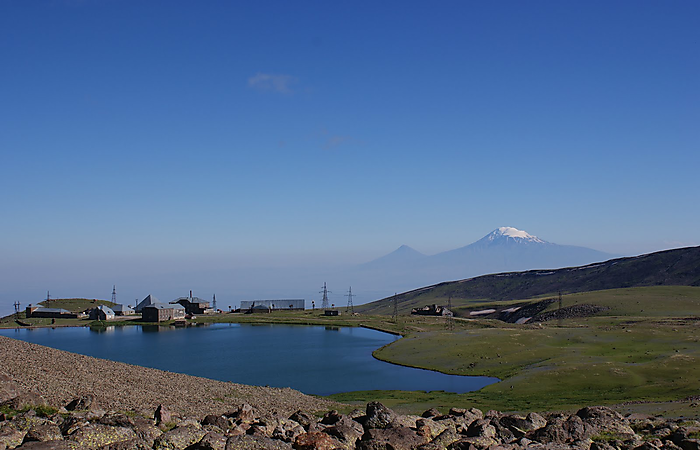
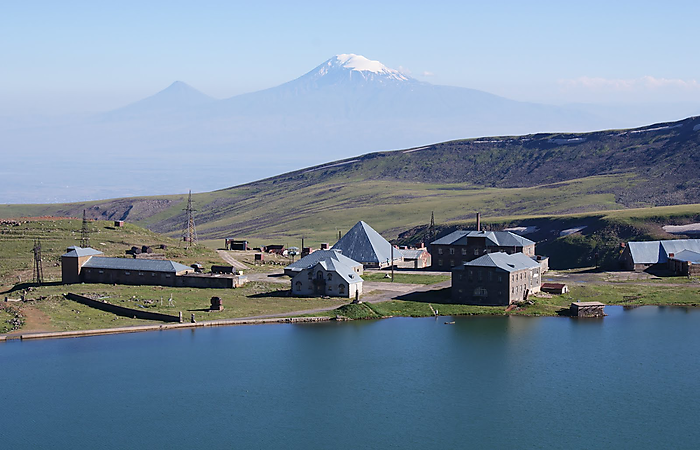
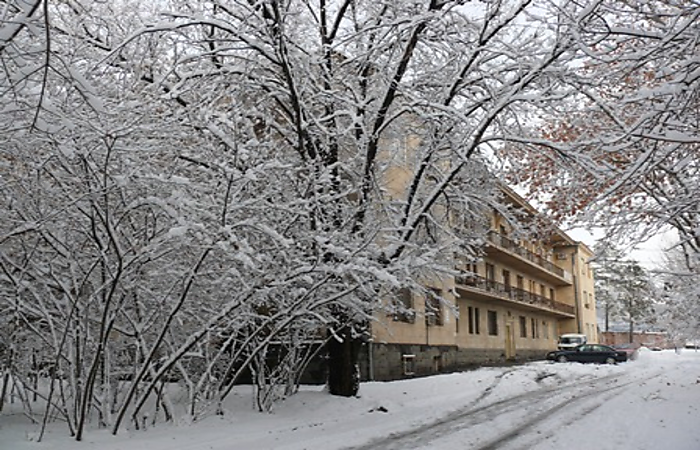
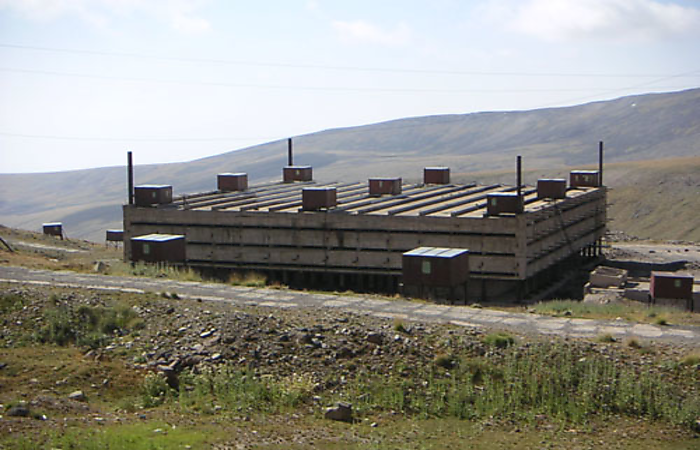
Cosmic Ray research at high altitude stations on Mt. Aragats, Armenia, was founded by famous Armenian physicists, Alikhanyan brothers, in 1943. Research facilities are located on two high-altitude stations on Mt.Aragats, Nor-Amberd Station and Aragats Station, and at CRD headquarters at Alikhanyan Physics Institute, Yerevan.
1. Origin and acceleration mechanisms of Galactic Cosmic Rays (GCR); experiments with surface arrays measuring Extensive Air Showers (EAS).
2. Particle acceleration in the vicinity of the Sun and their maximal energy.
3. Space Weather (SW) research and continuous monitoring of changing fluxes of secondary cosmic rays at high mountain altitudes using particle detectors of the Aragats Space Environmental center (ASEC), at 1000, 2000 and 3200 m altitudes.
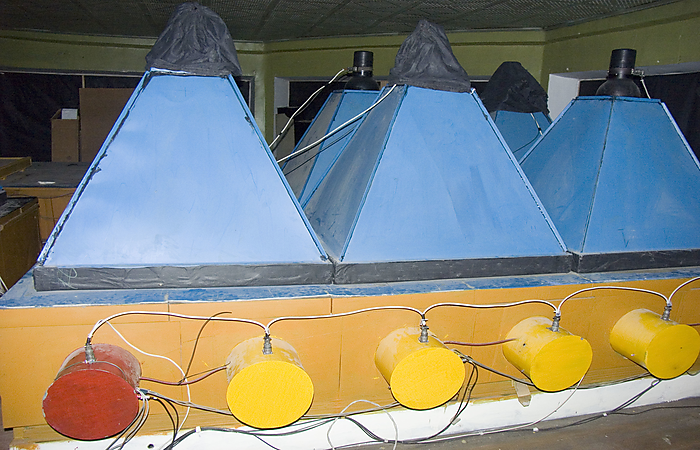
4. Development of worldwide network of particle detectors called SEVAN (Space Environmental Viewing and Analysis Network) and fabrication of new types of particle detectors and DAQ electronics for secondary cosmic ray flux monitoring.
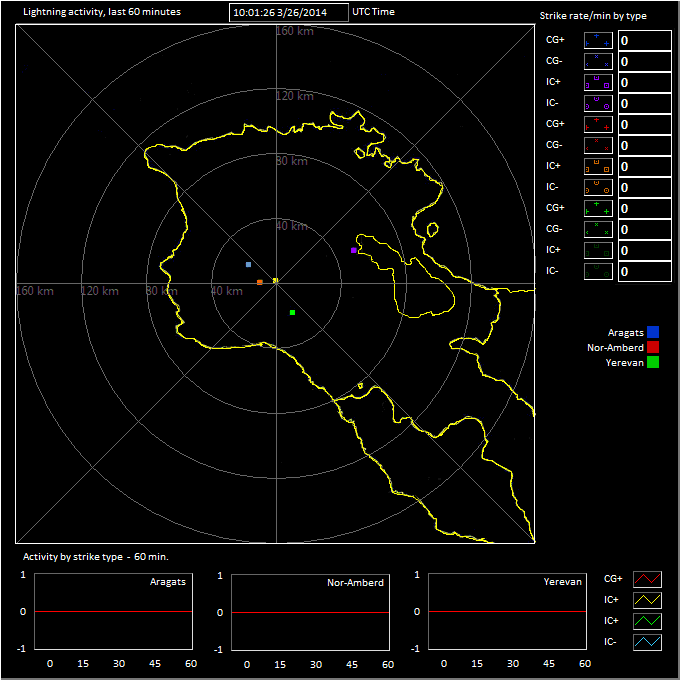
5. High Energy phenomena in low atmosphereDespite multiyear research, many questions on high energy phenomena connected with thunderstorms fail making convincing experimental detection and theories and models fail to explain how lightning works. Measured fluxes of energetic particles, as well as broad band radio emission, can provide necessary information for the new theories of the physical processes involved in the thunderstorm and lightning. The Aragats Space Environment Center facilities regularly measure fluxes of neutral and charged secondary cosmic rays incident on the Earth’s surface. In 2009 we simultaneously detected very large fluxes of electrons, gamma-rays and neutrons correlated with thunderstorm activity. During the period of the count rate enhancements lasting tens of minutes, millions of additional particles were detected. First time measured energy spectra of electrons and gamma-rays rapidly fell and vanished at ~ 30-40 MeV.
6. Development of the statistical methods and data analysis software for the physical interpretation of multivariate data from complicated non-direct experiments in high energy astrophysics, including EAS and ACT experiment; Development of the interactive tools for the interactive multivariate data display and analysis (Konopelko et al., 2006, Bock et al., 2004, Antoni et al., 2003, Chilingarian & Vardanyan, 2003).
Topics of possible cooperation with Cosmic Ray Division (CRD)
- Cooperation in instrumentation and measuring of secondary fluxes of cosmic rays and other Geospace parameters for basic Space research, developing forewarning services by participating in the ASEC activities in Armenia and by installing SEVAN detector and participating in the world-wide network (see the ASEC and SEVAN pages in: http://Aragats.am ).
-
2010 campaign on multivariate investigation of the high energy phenomen in thunderstorms, including:
Location of lightnings time and place;
VLF and FM radio measurements with sampling rate not worse than 10 KHz;
Measurements of the electrical and magnetic fields;
Video- monitoring of sky between Aragats and Ararat;
Infrared and ultraviolent measurements.
- Participation in the ANI-new project of detection of ultra-high energy cosmic rays (1017 - 1019 eV) at Aragats Cosmic Ray Observatory (Chilingarian et al., 2007c, see also presentation at European Cosmic Ray Symposium, Kosice, 2008, http://ecrs2008.saske.sk/presentations.php)
Reference
- A. Chilingarian, G. Hovsepyan, K. Arakelyan, S. Chilingaryan, V. Danielyan, K. Avakyan, A. Yeghikyan, A. Reymers, S. Tserunyan. (2008), Space Environmental Viewing and Analysis Network (SEVAN), Earth, Moon, and Planets, in press.
- Chilingarian A.A. (2008), Statistical study of the detection of solar protons of highest energies at 20 January 2005, Advances of Space Research, in press.
- A. Chilingarian and A. Reymers, Investigations of the response of hybrid particle detectors for the Space Environmental Viewing and Analysis Network (SEVAN) (2008), Ann. Geophys., 26, 249-257.
- A.Chilingarian et al, Study of EAS and Primary Energy Spectra by MAKET-ANI Detector on Mountain Aragats, Astroparticle Physics 28 (2007a) 58-71.
- A. Chilingarian, L. Melkumyan, G. Hovsepyan, A. Reymers, The response function of the Aragats Solar Neutron Telescope, Nuclear Instruments and Methods in Physics Research A 574 (2007b) 255-263
- A.Chilingarian, G.Hovsepyan, V.Ivanov, et al., Research on Galactic Cosmic Rays from “knee” to the “cutoff” at the Aragats Cosmic Ray Observatory (Proposal of New ANI project), (2007c)Proceedings of the International Cosmic Ray Workshop “Aragats2007”, 130-137).
- Bostanjyan, N.K. et al., On the production of highest energy solar protons at 20 January 2005, J. Adv. Space Res. 39 (2007) 1456-1459.
- A.A. Chilingarian, A.E. Reymers, Particle detectors in Solar Physics and Space Weather research, Astroparticle Physics (2007), Astropart. Phys., 27, 465-472
- A Konopelko, A Chilingarian and A Reymers, Study on cosmic ray background rejection with a 30 m stand-alone IACT using non-parametric multivariate methods in a sub-100 GeV energy range, J. Phys. G: Nucl. Part. Phys. 32 (2006) 2279.2291
- A. Chilingarian, G. Gharagyozyan, G.Hovsepyan, G.Karapetyan, Statistical Methods for Signal Estimation of Point Sources of Cosmic Rays, Astroparticle physics 25, pp 269-276
- A.Chilingarian for the ASEC team, (2005) Correlated Measurements of Secondary Cosmic Ray Fluxes by the Aragats Space- Environmental Center Monitors,NIM-A, 543, 483-496
- R.K. Bock, A. Chilingarian, et. al.(2004), Methods for Multidimensional Event Classification: a Case Study Using Images from a Cherenkov Gamma-Ray Telescope, Nuclear Instruments and Methods in Physics Research A516, pp. 511-528.
- A.Chilingarian, K.Avakyan et. al, Aragats Space-Environmental Center: Status and SEP Forecasting Possibilities, Journal of Physics G:Nucl.Part.Phys., Vol.29 (2003), pp 939-952.
- A. Chilingarian, G. Gharagyozyan, G. Hovsepyan, S. Ghazaryan, L. Melkumyan, and A. Vardanyan,(2004) Light and Heavy Cosmic-Ray Mass Group Energy Spectra as Measured by the MAKET-ANI Detector, The ApJ letters, 603,pp. L29-L32.
- T.Antoni, et al. for the KASCADE collaboration, Preparation of Enriched Cosmic Ray Mass Groups with KASCADE Astroparticle Physics Vol.19 (2003), pp.715-728.
- A. A. Chilingarian, A.A. Vardanyan, Multivariate Methods of Data Analysis in Cosmic Ray Astrophysics, Nuclear Instruments & Methods (NIM), Vol.502/2-3 (2003), pp 787-788.